
Medically Reviewed By
Dr. K. S. Kavitha Gautham
MBBS, MS (OG), DRM (Germany), FIMSA, FICOG · Senior Consultant & Managing Director, BloomLife Hospital
Dr. Kavitha Gautham is a fertility specialist and obstetrician-gynaecologist with over two decades of experience and more than 5,000 IVF cycles. She leads the Reproductive Medicine & Fertility Centre at BloomLife Hospital, Velachery.
View full profile →You probably haven’t told anyone. Not your friends, maybe not even your family, just your wife…and the search bar. That’s completely normal, and worth knowing upfront, that male factors contribute to roughly 40 to 50% of couples’ fertility difficulty. This isn’t a rare or unusual thing to be dealing with privately. So, here’s an honest, evidence-ranked answer on how to increase sperm count, what actually has research behind it, what’s mostly marketing, and a realistic timeline for when changes actually show up.
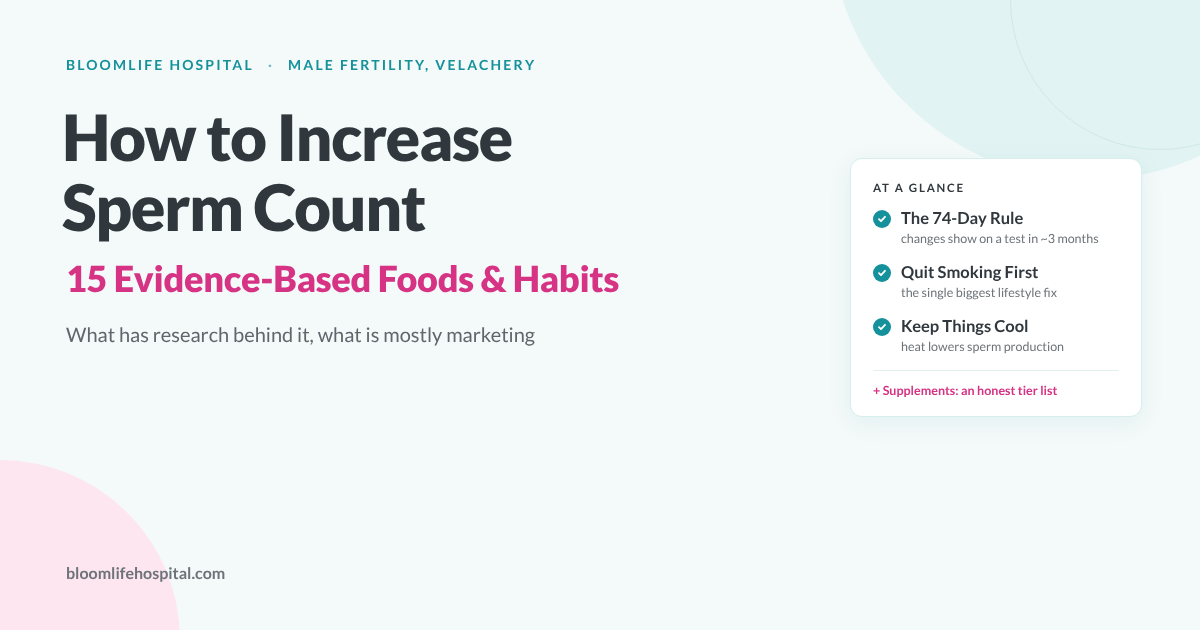
The 74 Day Rule
This is the single most important thing to understand before changing anything: Sperm takes roughly 74 days to fully develop from start to finish. Whatever you change today, quitting smoking, starting a supplement, adjusting your diet, won’t show up in a semen analysis next week. It shows up in a test taken about three months from now.
This isn’t a reason to wait before starting, it’s the opposite. The sooner you start, the sooner that 74 day clock begins working in your favour. A test taken too soon after making changes will look identical to your last one, not because nothing worked, but because the sperm being tested was already mid-development before you changed anything.
15 Evidence-Based Actions
Food
- Zinc sources (pumpkin seeds, chickpeas, cashews). Zinc deficiency is linked to lower testosterone and reduced sperm concentration in multiple studies.
- Folate (leafy greens, lentils). Low folate intake is linked to higher rates of sperm DNA fragmentation and chromosomal abnormalities in sperm.
- Omega-3s (walnuts, flaxseed, fatty fish). Associated with improved sperm motility in several trials.
- Antioxidant rich fruits and vegetables (tomatoes, citrus, pomegranate). Oxidative stress is implicated in 30 to 80% of male subfertility cases, antioxidants directly counter this.
- Walnuts, specifically. Called out separately since they combine omega-3s and antioxidants in one food, one of the more consistently studied single foods in this space.
Habits
- Stop smoking, the single biggest fix. Smoking is one of the most well established factors reducing sperm count, motility, and DNA quality. If you take one thing from this list, this is it.
- Moderate alcohol. Heavy, regular drinking measurably lowers testosterone and sperm parameters, occasional moderate drinking has much weaker evidence of harm.
- Avoid unnecessary heat exposure. Laptops on the lap, saunas, hot tubs, tight underwear worn daily, all raise scrotal temperature, and sperm production is heat sensitive by design.
- Exercise, without overtraining. Moderate regular exercise supports healthy testosterone. Extreme endurance training or overtraining has actually been linked to the opposite effect in some studies.
- Sleep. Poor sleep disrupts the hormonal signalling that supports healthy sperm production, an under-discussed factor.
- Healthy weight. Both significant obesity and being notably underweight are linked to lower sperm parameters.
Caution
- Steroid and gym supplement warning, a major hidden cause in young Indian men. Anabolic steroids and unregulated “muscle building” supplements can suppress natural testosterone production and sperm count significantly, sometimes for months after stopping. This is genuinely one of the more common, under-discussed causes we see in younger men specifically.
- Recreational substances. Regular use of substances beyond alcohol and tobacco is linked to reduced sperm quality across multiple studies, worth being honest with your doctor about, confidentially, rather than leaving out of the conversation.
Two more worth naming directly
- Managing chronic conditions. Poorly controlled diabetes and thyroid dysfunction both affect sperm parameters, treating the underlying condition often improves fertility markers as a side effect.
- Reducing occupational and environmental heat or toxin exposure, relevant for men in certain manufacturing, welding, or long haul driving roles specifically, where prolonged heat or chemical exposure is a known factor.
Supplements, an Honest Tier List
Reasonable evidence behind it. A combined folic acid and zinc supplement has real trial support, one frequently cited study found this combination increased total normal sperm count by roughly 74% in subfertile men. CoQ10 has evidence supporting improved sperm motility and antioxidant protection. L-carnitine has moderate evidence, mainly for motility. But always check with your physician before starting to consume any new supplement.
Mostly marketing. Many ‘male fertility blend’ products combine a long list of ingredients into a proprietary mix and cite an internal, non-independent study behind a specific percentage improvement claim. Be skeptical of any number that sounds unusually precise without a named, published trial behind it.
The one rule that matters more than which supplement you pick, see a doctor before stacking multiple pills together. Several of these nutrients (zinc, selenium, vitamin E in particular) can cause real side effects at high doses, and taking several supplements simultaneously without guidance risks exceeding safe combined amounts without realising it.
When Lifestyle Isn’t Enough
Some situations genuinely need medical evaluation rather than diet and lifestyle changes alone. Azoospermia (no sperm detected) or severe oligospermia (very low count) need a proper workup, not a supplement stack, since diet changes alone won’t resolve a structural or hormonal cause.
Varicocele, enlarged veins in the scrotum that raise testicular temperature, is one of the most common treatable causes of poor sperm quality, present in around 40% of infertile men in some studies. It’s fixable surgically, often with meaningful improvement in semen parameters afterward.
Hormonal causes and obstruction (a physical blockage preventing sperm from reaching semen) both need targeted evaluation and treatment specific to the cause, not general lifestyle advice.
An andrology workup at Bloom typically includes a detailed history, a physical exam, hormone panel, and imaging if a varicocele or obstruction is suspected. This entire process is handled with full confidentiality, this is a private medical concern, not something discussed beyond your own care team.
A patient we saw last year had a below-normal count on his first semen analysis and assumed, understandably, that this meant a permanent problem. A proper workup found a treatable varicocele, and his numbers improved meaningfully within a few months of the correction. Not every case resolves this cleanly, but it’s a fair illustration of why a below-normal first result is a starting point for investigation, not a final answer.
Retesting the Right Way
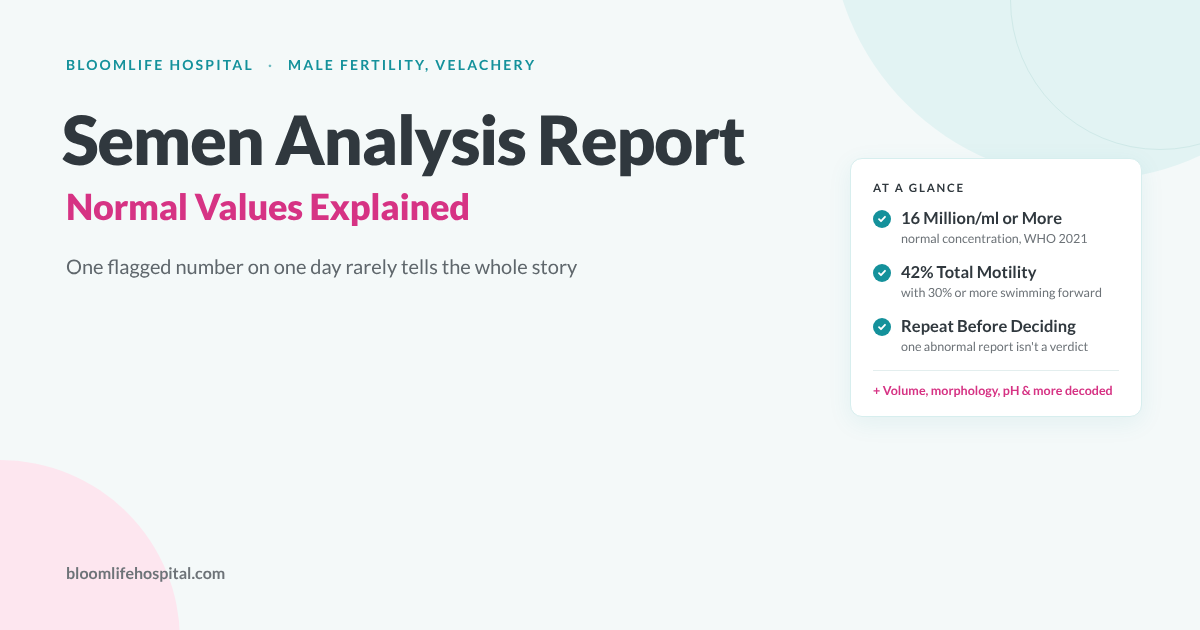
Repeat your semen analysis after a full 3 months, not sooner, to actually see whether changes had time to show up given the 74 day production cycle. Use the same lab both times if possible, since reference ranges and measurement techniques can vary slightly between labs. Follow the same abstinence window before both tests, typically 2 to 5 days, since ejaculation frequency directly affects the count on any given sample.
Talk to BloomLife Hospital’s Team, Discreetly
If you’ve read this far because a result came back lower than expected, you’re not alone in searching for this privately, and there’s a real, structured path forward from here. Book a discreet male fertility consultation in Chennai or call 72999 11102.
Frequently Asked Questions
1. How can I increase my sperm count naturally?
The strongest evidence points to quitting smoking, moderating alcohol, avoiding unnecessary heat exposure, maintaining a healthy weight, and getting adequate sleep. A combined zinc and folate intake also has solid research support. Changes take roughly 74 days to reflect in a semen analysis, so consistency matters more than any single quick fix.
2. Which foods increase sperm count fastest?
No food works instantly, since sperm takes about 74 days to fully develop. Zinc sources (pumpkin seeds, chickpeas), folate (leafy greens, lentils), omega-3s (walnuts, fatty fish), and antioxidant rich fruits and vegetables have the most consistent evidence, working together rather than any single food alone.
3. How long does it take to improve sperm count?
Approximately 3 months, since a complete sperm production cycle takes about 74 days. A repeat semen analysis before this window has passed will likely look similar to your previous result, not because changes failed, but because there hasn’t been enough time for new, healthier sperm to complete development.
4. Does smoking reduce sperm count?
Yes, smoking is one of the most well established factors reducing sperm count, motility, and DNA quality. Quitting is widely considered the single highest impact change a man can make for sperm health, with measurable improvement typically visible within a few months of quitting.
5. When should a man see a fertility doctor?
See a doctor if a semen analysis shows a significantly low count, if lifestyle changes haven’t improved a borderline result after 3 months, or if there’s a known issue like a varicocele or a hormonal condition. A proper workup identifies treatable causes that diet and lifestyle changes alone can’t fix.