
Medically Reviewed By
Dr. K. S. Kavitha Gautham
MBBS, MS (OG), DRM (Germany), FIMSA, FICOG · Senior Consultant & Managing Director, BloomLife Hospital
Dr. Kavitha Gautham is a fertility specialist and obstetrician-gynaecologist with over two decades of experience and more than 5,000 IVF cycles. She leads the Reproductive Medicine & Fertility Centre at BloomLife Hospital, Velachery.
View full profile →Your mother just quietly removed the papaya from the fridge ‘for safety’, and now you’re standing there half believing her and half-suspecting it’s just another pregnancy myth. Fair question, and it deserves a real answer, not a blanket ‘yes’ or ‘no’.
Here’s the actual verdict on papaya in pregnancy, the science behind it, and why the caution came from somewhere real, even if it’s usually explained badly.
The Verdict, Up Front
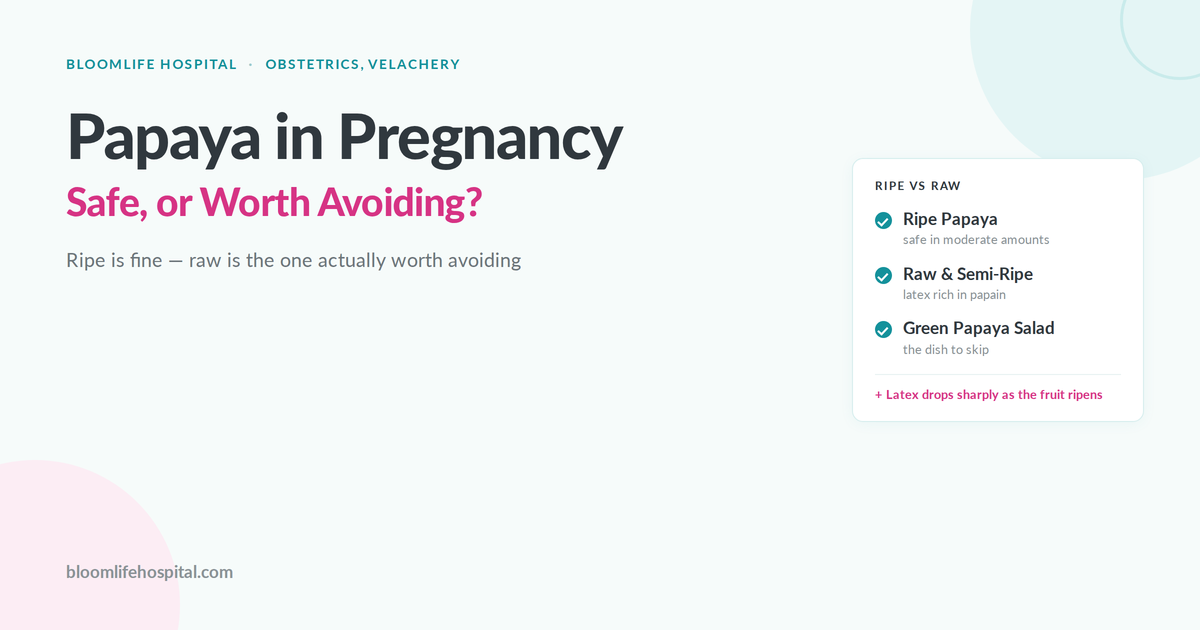
Ripe papaya is generally considered safe to eat during a normal pregnancy, in moderate amounts. Raw or semi-ripe papaya is the one worth actually avoiding, because of a latex compound concentrated in the unripe fruit.
This is the distinction most family warnings skip entirely: ‘No papaya’ becomes the rule, when the real rule is ‘no RAW papaya’. Once you know which one is which, the rest of this gets a lot simpler.
The Science, in Plain Terms
Unripe and semi-ripe papaya contain a milky white latex, concentrated in the skin, seeds, and unripe flesh. This latex is rich in papain, an enzyme, along with related compounds that behave somewhat like prostaglandins and oxytocin, the same hormones your body uses to actually start labour.
The most frequently cited research here is a 2002 study published in the British Journal of Nutrition, where researchers extracted latex from unripe papaya and tested it directly on uterine tissue in a rat model. The latex produced significant contractions at fairly low concentrations. Ripe papaya, tested the same way, did not produce that same effect.
This is animal and lab research, not a human clinical trial. There’s no ethical way to test this directly on pregnant women, so the caution is precautionary and biologically plausible rather than definitively proven in humans. That said, it’s a sensible one to follow, since the mechanism is real and the fruit is easy enough to avoid in its unripe form. This is likely why the blanket “no papaya” warning spread so widely, it’s simpler to say “avoid the whole fruit” than to explain the ripeness distinction every single time.
Ripe vs Raw, How to Tell
Ripe papaya has yellow to deep orange skin with little or no green, soft orange or salmon flesh, a sweet smell, and very little visible latex when cut. Unripe or semi-ripe papaya is green or mostly green, firm or crunchy, pale inside, and releases a sticky white sap when cut or scratched, that sap is exactly what you’re avoiding.
A few common dishes worth knowing use raw papaya specifically, green papaya salad (a Thai-style dish increasingly common at restaurants), certain South Indian and Southeast Asian pickles, and papaya used as a meat tenderiser in some marinades. These are the ones to skip, not a ripe papaya smoothie or fruit bowl.
The Other “Forbidden Fruits”: A Respectful Truth Check
Papaya isn’t the only fruit that’s ended up on a family banned list, and it’s worth going through the others honestly, since the caution behind each one came from somewhere, even if the evidence doesn’t always support a full ban.
Pineapple. The myth here is almost identical in shape to papaya’s. Bromelain, an enzyme in pineapple, is believed to soften the cervix. In reality, you’d need to eat somewhere around 7 to 10 whole pineapples in one sitting to get a concentrated enough dose to matter, and even then, most of it breaks down in digestion before it reaches your bloodstream. Fresh pineapple in normal amounts is safe. Bromelain supplements, a concentrated extract, are the one to avoid, not the fruit itself.
Grapes. No real evidence links normal grape consumption to any pregnancy risk. The caution here tends to come from Ayurvedic “heating food” traditions rather than modern research, worth respecting as a cultural framework, without treating it as a medical restriction.
Jamun. Similarly rooted in traditional heat and cooling food classifications rather than documented pregnancy risk. Jamun in normal amounts is not something obstetric guidance flags as unsafe.
Sesame seeds. Also carries a “heating food” caution in some traditions, sometimes linked to a fear of miscarriage. There’s no clinical evidence supporting this restriction, sesame in normal cooking quantities, not concentrated sesame oil consumed by the spoonful, is considered fine.
None of these traditional cautions are baseless in spirit – they usually reflect a genuine impulse to protect a pregnancy carefully. The distinction worth making is between traditions worth honouring as culture and restrictions that actually change a medical outcome, and papaya is really the only one on this list where the biology backs up a real, specific caution.
What Actually Matters in Your Pregnancy Diet
Here’s the less exciting, more useful list, since the specific fruit debates tend to get more attention than the things that genuinely matter more.
Wash all fruit and vegetables thoroughly before eating, this matters more than almost any single food choice. Eat in moderation rather than obsessing over any one food. Prioritise iron, calcium, and protein, as these three come up short in a lot of Indian pregnancy diets specifically, worth asking your doctor about specific targets for your own case.
What’s genuinely worth avoiding, includes:
- unpasteurised dairy,
- raw or undercooked meat and eggs
- high mercury fish like king mackerel or shark
These carry documented risks with real clinical evidence behind them, a category papaya, pineapple, and sesame simply don’t belong in.
A patient we saw last year had stopped eating almost everything her mother-in-law flagged, out of caution more than conviction, and ended up with a genuinely limited, repetitive diet by her second trimester. Once we walked through what actually needed avoiding versus what didn’t, her diet opened back up considerably, and she felt noticeably less anxious about mealtimes generally.
When to Be Extra Careful
If you have a history of miscarriage, preterm labour, or a currently high risk pregnancy, general guidance like this article is a starting point, not a substitute for your own doctor’s specific advice for your case. Some doctors recommend a more cautious approach to papaya, pineapple, and similar foods specifically in high risk pregnancies, even where the general evidence is reassuring, since individual circumstances change the calculation.
How BloomLife Hospital’s Team Approaches This
At BloomLife Hospital, dietary questions like this one come up in nearly every antenatal visit, and the answer is rarely a flat yes or no, it depends on your specific pregnancy, your history, and what trimester you’re in.
If you’ve been navigating a fridge full of family food rules and want a clear, personalised answer instead of general guidance, that’s exactly what an antenatal consultation is for. Book an obstetrician consultation in Chennai or call 72999 11102.
For related reading on pregnancy and fertility topics, our guide on what to know about natural delivery covers another common set of questions this same stage of pregnancy brings up.
Frequently Asked Questions
Can I eat papaya during pregnancy?
Yes, ripe papaya is generally considered safe in moderate amounts during a normal pregnancy. Raw or semi-ripe papaya is the one to avoid, since it contains a latex compound linked to uterine contractions in research. The ripeness of the fruit, not papaya as a category, is what determines the risk.
Is ripe papaya safe in pregnancy?
Yes. Ripe papaya has very little of the latex and papain found in the unripe fruit, and is considered safe in normal food amounts. It also provides useful nutrients during pregnancy, including folate, vitamin C, and fibre, worth including rather than avoiding once you know it’s ripe.
Why is raw papaya avoided during pregnancy?
Raw and semi-ripe papaya contain a latex compound rich in papain, which research has linked to uterine contractions in lab and animal studies. As papaya ripens, both the latex and papain content drop sharply, which is why the distinction between raw and ripe matters more than avoiding papaya entirely.
Which fruits should be avoided during pregnancy?
Raw or semi-ripe papaya is the main one with a real, evidence-based caution behind it. Pineapple, grapes, jamun, and sesame are commonly restricted too, but the evidence for these is largely absent or based on traditional heat-based food classifications rather than documented pregnancy risk.
Can papaya cause miscarriage?
There’s no strong human evidence that ripe papaya, eaten in normal amounts, causes miscarriage. The concern applies specifically to raw or semi-ripe papaya’s latex content, and even there, most of the supporting evidence comes from animal studies rather than human trials, though it’s still a sensible caution to follow.